I did not grow up dreaming about airplanes.
I grew up in Nigeria. I trained as a scientist. My first real research was on prediction, building models that could tell you what was coming before it arrived. When I came to America for my master's at North Dakota State, that was still my world, data and the models that turned it into predictions. One word from that world followed me. It followed me from Nigeria to Fargo, from Ithaca to Manhattan, from the lab bench to the hangar.
On October 20, 2021, around 6 PM, I was in my apartment in New York, a graduate student at Cornell, on FaceTime with Ayomide (my COO and CoFounder), and we decided to build a company that predicts when airplane parts will fail before they fail. No aerospace degree between us, and no uncle at Boeing.
We built it anyway. That is the part of this essay that matters, and it is why I am writing it this week, because the country where we built it turns 250 years old tomorrow.
Two Bicycle Mechanics and a Government Program
Let me give you the receipts, because I always give you the receipts.
In 1898, the United States War Department gave Samuel Langley, secretary of the Smithsonian Institution, a $50,000 grant to build a flying machine. Add the Smithsonian's own money and the program cost roughly $70,000, a fortune at the time. Langley had every advantage his era could offer. The Smithsonian stood behind him, and the newspapers waited on the Potomac to watch history get made.
On December 8, 1903, his Aerodrome dropped off its launch catapult and folded into the river. Second failure in three months. The press buried him. Congress asked why the public had paid for a machine that could not fly.
Nine days later, on December 17, 1903, two bicycle mechanics from Dayton, Ohio flew four times over the sand at Kitty Hawk, North Carolina. Wilbur and Orville Wright had spent about $1,000 of their own bicycle shop money. Neither of them held a college degree. Nobody in Washington had approved them, and nobody in Washington knew who they were.
Now look at that timeline the way a businessman would.
The best funded, most institutionally blessed aviation project in America lost to two brothers who asked permission from no one. Seventy thousand dollars of institutional money bought a splash in the Potomac, while a thousand dollars of bicycle shop money bought the airplane.
That is the most American story ever told, and most Americans have stopped noticing what it actually says.
The Operating System
Here is my argument, stated plainly so you can disagree with it precisely.
Strip away the land, the flag, and the wealth, and what remains is the actual product. America ships an operating system, and its core feature is that you do not need permission to build.
The founders shipped version 1.0 in 1776 and they knew exactly what they were shipping. George Washington wrote in 1783 that the bosom of America was open to receive the oppressed and persecuted of all nations and religions. That was a market positioning statement. He was describing customer acquisition for a country that did not yet have customers.
Benjamin Franklin understood the fragility of the release. When a woman outside the Constitutional Convention asked him what the delegates had produced, a monarchy or a republic, he answered: "A republic, if you can keep it." Notice the conditional. Franklin was a printer and a tinkerer before he was a statesman. He knew that systems degrade without maintenance. He was telling her the warranty had terms.
And the founders wrote the permissionless layer directly into the architecture. The Constitution never mentions a ministry of invention. The Patent Clause gives Congress power to secure, for limited times, an inventor's exclusive right to his discovery. Secure the right. Then get out of the way. Thomas Jefferson, who examined patents himself as secretary of state, said he liked the dreams of the future better than the history of the past. A founder of a 250 year old institution telling you the roadmap matters more than the changelog.
The proof that the OS works is standing in the mirror every morning, combing out my afro.
The Most Vetted American in the Room
Alexander Hamilton was an immigrant from Nevis, an orphan who arrived with nothing and built the financial system of the United States. The country's first startup CFO was foreign born. That was the operating system running exactly as designed, allocating opportunity to whoever could execute, regardless of where the executor was compiled.
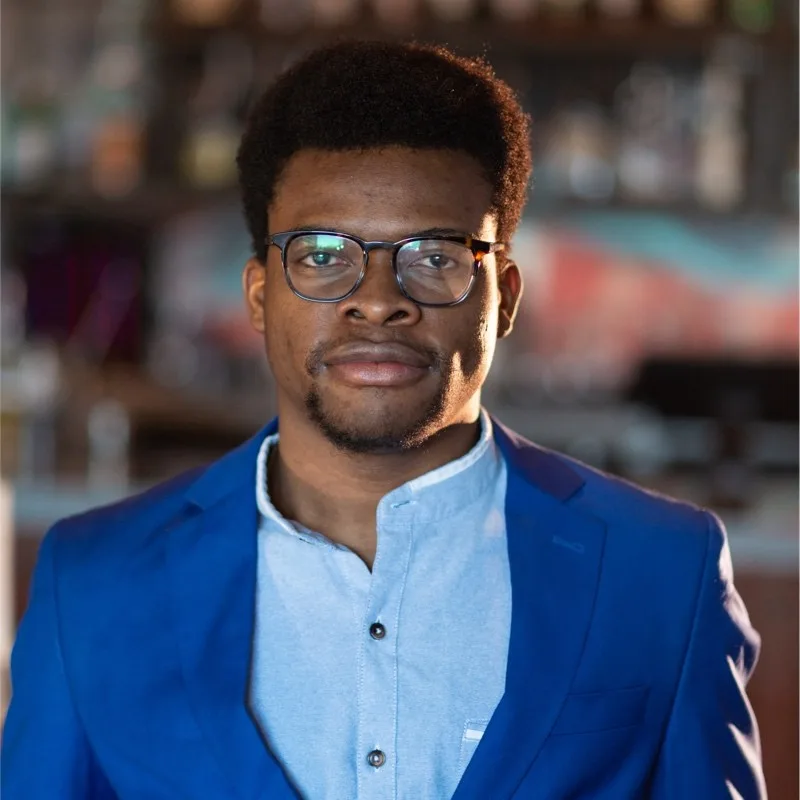
I think about Hamilton because I came here the modern way. Visa interviews, proof of funds, biometrics, then years of conditional status. I have been screened by this country more thoroughly than almost anyone born inside it. And after all of that screening, the system still let a Nigerian scientist walk into the aviation industry through the front door of a Queens apartment.
Today Kquika's software predicts aircraft component failures with roughly 95 percent accuracy. Airlines on multiple continents use it. In 2025 our Trakt system won an Aerospace Tech Review Award in Munich. I say this without false modesty because the point of this essay is bigger than my company. The point is that no regulator or incumbent ever had the power to tell us we were not allowed to try. The market would decide, and it is still deciding. That is the deal.
John Adams once wrote that he had to study politics and war so that his sons could study mathematics and philosophy, so that their children could study painting and music. Adams was describing compounding. Each generation builds the permission structure for the next one, and the interest is paid forward. I studied science so my company could study turbines. Somebody who works at Kquika today will study something I cannot yet imagine. The ledger keeps growing, and it only grows in one direction if the OS stays intact.
What Breaks
Now the uncomfortable part, because I never write these essays to flatter anyone.
Operating systems die in patches, one small compromise at a time, long before anything looks like a crash. A licensing requirement here and a ten year approval timeline there, until the immigration queue grows so long that the next Hamilton builds his financial system in Toronto instead. Langley's ghost is patient. The credentialed, permission-first model of progress never really loses. It just waits for the country to get tired of bicycle mechanics.
I see the warning signs the way a maintenance engineer sees them, in small anomalies long before the failure. I see it when founders spend more time on compliance than on customers, or when a visa takes longer than a product cycle. I see it most clearly when the default answer to a new idea becomes "who approved this" instead of "does it fly."
My company exists because America notices failure before it happens in machines. The republic deserves the same predictive maintenance. Franklin's conditional was a maintenance schedule. If you can keep it. Keeping it is work. Keeping it means the permissionless layer stays permissionless for the next stranger with an accent and a laptop, the way it stayed open for two brothers with a bicycle shop, the way it stayed open for me.
250
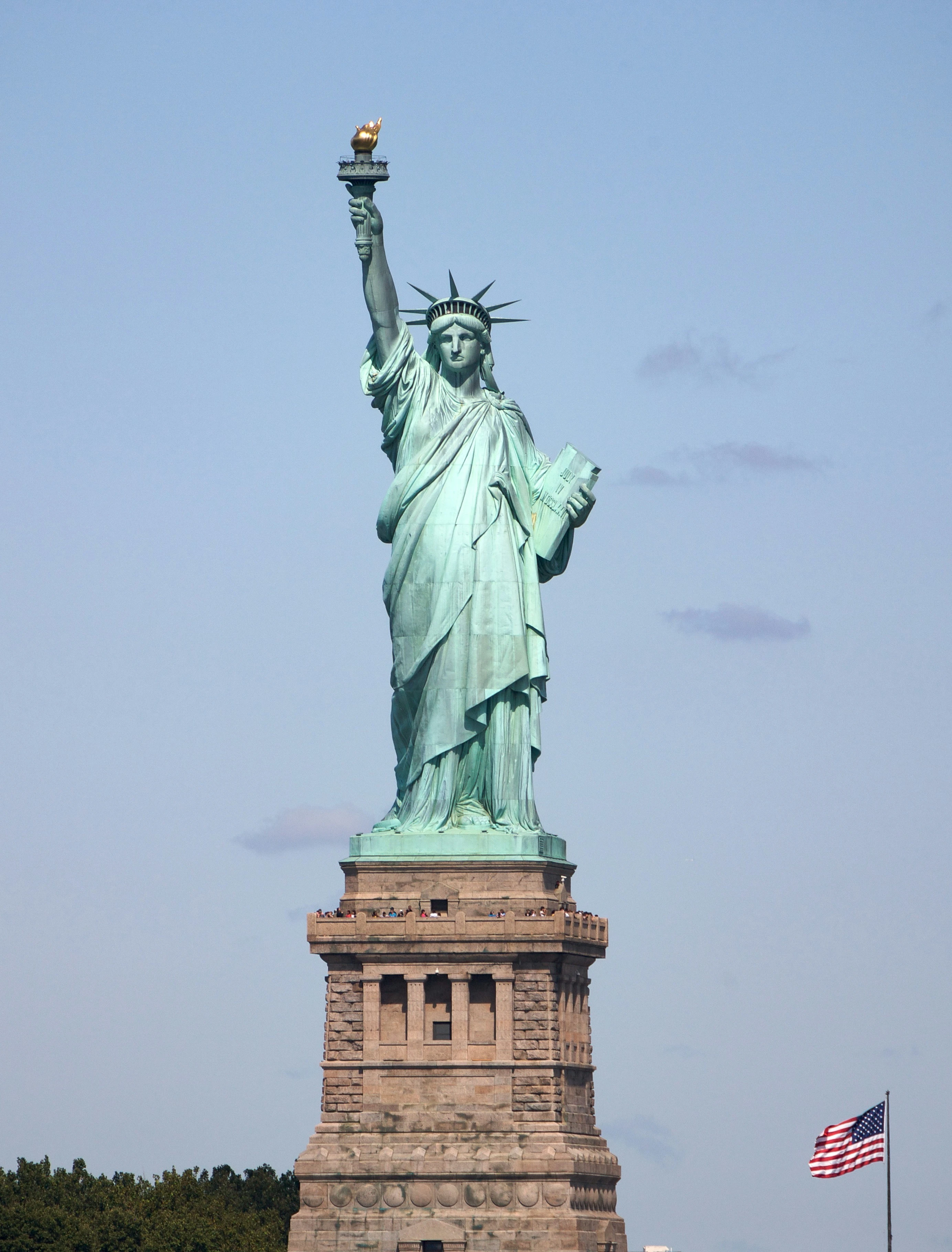
Tomorrow the fireworks go up over the East River, and I will watch them from the city where I built my company. My first Fourth of July in this country, the fireworks belonged to someone else's birthday. Tomorrow they belong to a system I have paid into, been vetted by, argued with, and built inside of.
America at 250 is old for a government and young for an idea. The idea is simple enough to fit on a bicycle shop workbench: secure the right, then get out of the way, and let the sand at Kitty Hawk keep the score.
The Wrights flew 120 feet on the first attempt. Shorter than the wingspan of the aircraft my software watches over today. Every long flight in history descends from one short one that nobody authorized.
Happy 250th, America. Stay young enough to keep the runway open for whoever arrives next with an accent and a laptop. Keep the republic.
V
I Built an Aviation Company in the Country That Invented Flight
I Built an Aviation Company in the Country That Invented Flight