
It was around 6 p.m. Eastern on October 20, 2021. I was in my apartment in New York, a graduate student at Cornell, on FaceTime with Ayomide, who would go on to become Kquika's co-founder and COO. We were talking through the company we were about to launch, and I caught myself thinking back to how the whole thing started.
About a year before that call, in the middle of the pandemic lockdown, I spotted a real opportunity to build for the aviation industry. I spent months researching it and talking to people who work in the business every day. When I finally walked Ayomide through the idea, he saw the potential right away.
As launch got closer, we wanted a name that carried the mission. We landed on KQUIKA, short for Quick and Unique Knowledge Access, because the whole point is getting clients the critical information they need the moment they need it.
A month after we locked in the name, with the legal consultations and paperwork done, we incorporated Kquika, Inc. at 6 a.m. on November 11, 2021.
Today Kquika turns three. I've spent these three years as CEO building for one of the most demanding niche industries on the planet, and I've collected more lessons than I can fit in one post. These are the ones that cost me the most to learn.
Product development
- Start with a clear problem, and let the solution come out of it.
- Aviation is incredibly complex. Immerse yourself until you understand how the industry actually runs.
- Build for scale from day one, and keep building systems that grow with you.
- Launch early and iterate often. Waiting for perfect will cost you progress.
- Documentation matters more than you think, especially in a regulated industry.
- Treat security and client data protection as the foundation everything else sits on.
- Listen closely to users, and keep the product decisions in your own hands.
The all-in moment
"You want to know how I did it? This is how I did it, Anton: I never saved anything for the swim back." Vincent Freeman, Gattaca (1997)
- Dropping out of my graduate program meant burning the boats. There was no version of this where I went back.
- Like Vincent, I had to put everything into the swim out.
- The moment you keep a backup plan, you've started planning to fail.
- In an early-stage startup, work and life merge into the same thing.
- Your startup is like a child, and it needs constant attention to survive.
- The hardest stretch comes after the jump, when things get ugly and you still have to stay committed.
Team building and hiring
- Your first 10 hires shape your company's DNA. We're nine people in, so I feel this every day. Hire slowly and fire quickly.
- Technical skill gets someone in the door. Look for the people who are irrationally passionate about what you're building.
- Remote work is powerful, and an early team still needs real face time.
- Culture is how people behave when nobody is watching.
- Early on, hire for potential over experience.
- A players hire A players, and B players hire C players, so never compromise on talent.
- A co-founder relationship works like a marriage, and communication is what holds it together.
Winning clients in aviation
- Sales cycles are long, so plan your runway around them.
- Trust is everything. One wrong move can close a door for good.
- Industry relationships will get you further than a fancy pitch deck.
- The person who signs the contract is often a different person from the one who uses your product.
- Proofs of concept are expensive, and you need them anyway.
- Aviation is a small world, and your reputation reaches the next customer before you do.
- Enterprise sales reward patience and persistence.
Fundraising and money
- Bootstrap as long as you can (if you can).
- Every dollar you spend should solve a critical problem.
- Investors want to watch your progress over time, a point Mark Suster made famous back in 2010, so start those relationships long before you need the money.
- Keep at least 18 months of runway.
- Watch your unit economics from day one.
- In our experience, government contracts take about three times longer than expected.
- Too much money too early can hurt you as badly as too little.
Personal growth
- Get comfortable making decisions with incomplete information.
- Build a support system outside the company.
- Your physical health drives your thinking, so take care of your body.
- Say no to good opportunities so you have room for the great ones.
- Guard your time. It's the most valuable asset you have.
Aviation-specific lessons
- Build safety culture into your company's DNA from the start.
- Compliance is mandatory, so build relationships with certification authorities early.
- Learn how maintenance operations really work.
- Integration capabilities win more deals than long feature lists.
- The right advisors can close the gaps in your industry experience.
The hard truths
- Success takes longer than your most pessimistic estimate.
- Your first product version will probably be wrong.
- Most people won't understand your vision, and that's fine.
- The highest highs and the lowest lows often land in the same week.
- At some point you'll question everything.
- The journey changes you in every way you can imagine.
- "Overnight success" usually takes years.
Moving forward
- Keep detailed records. You'll be glad you did.
- Stay curious and keep learning.
- Network even when you don't need anything.
- Build for the long term.
- Remember why you started.
- In aviation, real innovation means building something people can trust and rely on.
Why we keep going
Steve Jobs dropped out of Reed College after six months. Years later, he told Stanford's class of 2005 that "the only way to do great work is to love what you do." These three years have been that idea in practice. Every line of code and every sleepless night came from believing in what we're building. We went from a FaceTime call in a grad student's apartment to where we are today, and I'm still a little amazed by it.
It took imagination to picture a different aviation industry, and perseverance to push through obstacle after obstacle. It took courage to challenge how things have always been done, and resilience to keep going while people doubted us.
In July 1813, one of Napoleon's generals, Count Le Marois, wrote back that a request from the emperor was impossible. Napoleon's reply, as the story is traditionally told: "It is not possible, you write? That is not French." The line eventually got shortened to "Impossible is not French." We've had plenty of our own "impossible" moments over three years, and we turned them into openings.
Nobody has to push us. The vision of a better aviation and aerospace industry does the pulling. At Kquika, we chose to lead, and we're after impact that lasts in an industry that touches millions of lives every day.
On this birthday, we honor:
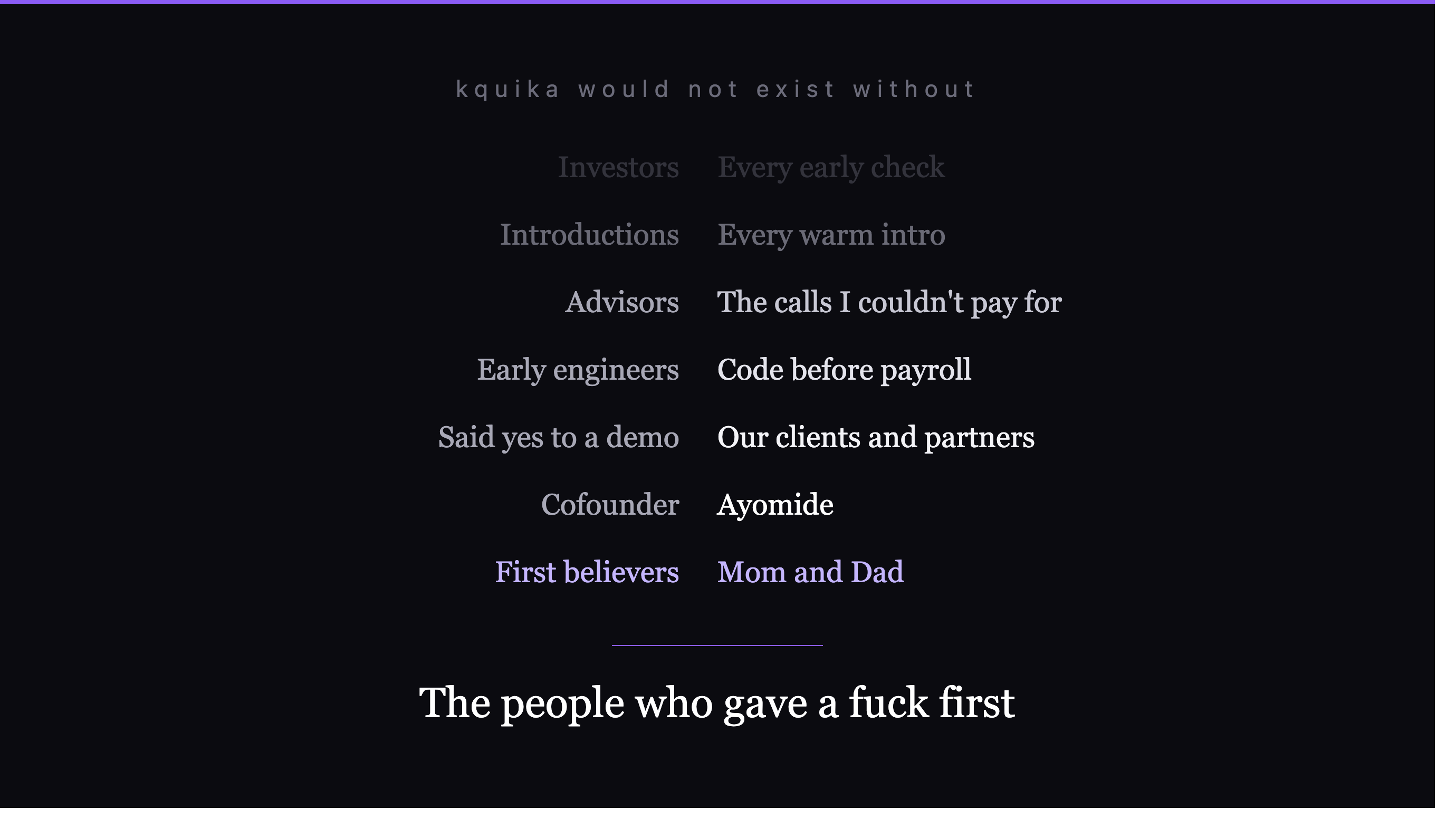
- Our team, who poured their hearts into this mission.
- Our clients, who trusted a young startup with their critical operations.
- Our early supporters, who believed in us when we were just an idea.
- Our families, who understood every missed dinner and celebration.
Here's to three years of obstacles cleared, and to the many more years ahead.
Jobs closed that same Stanford speech with the farewell message from the back cover of the final Whole Earth Catalog: "Stay Hungry. Stay Foolish." We're just getting started.
Happy birthday, Kquika. The best is yet to come.