
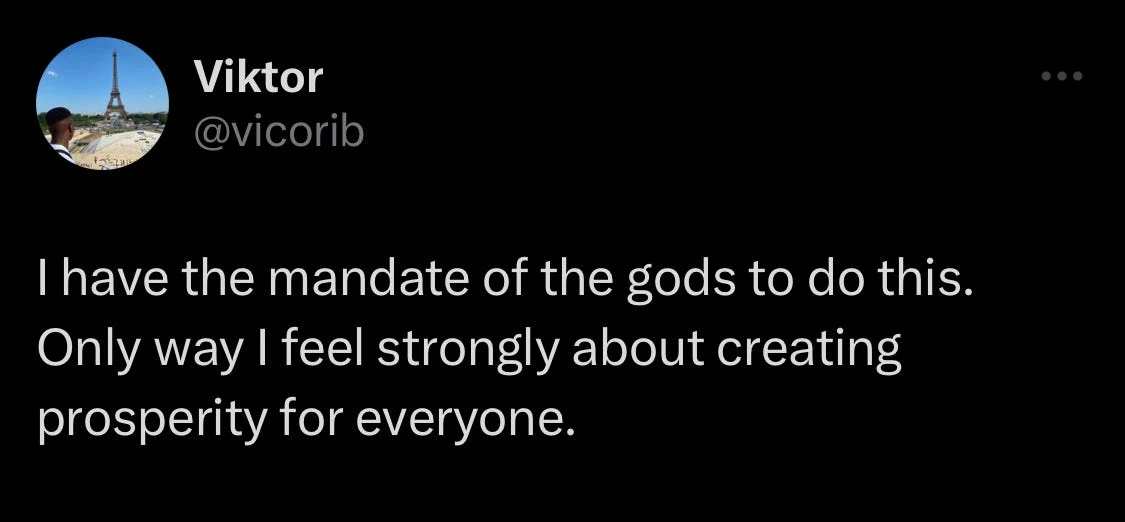
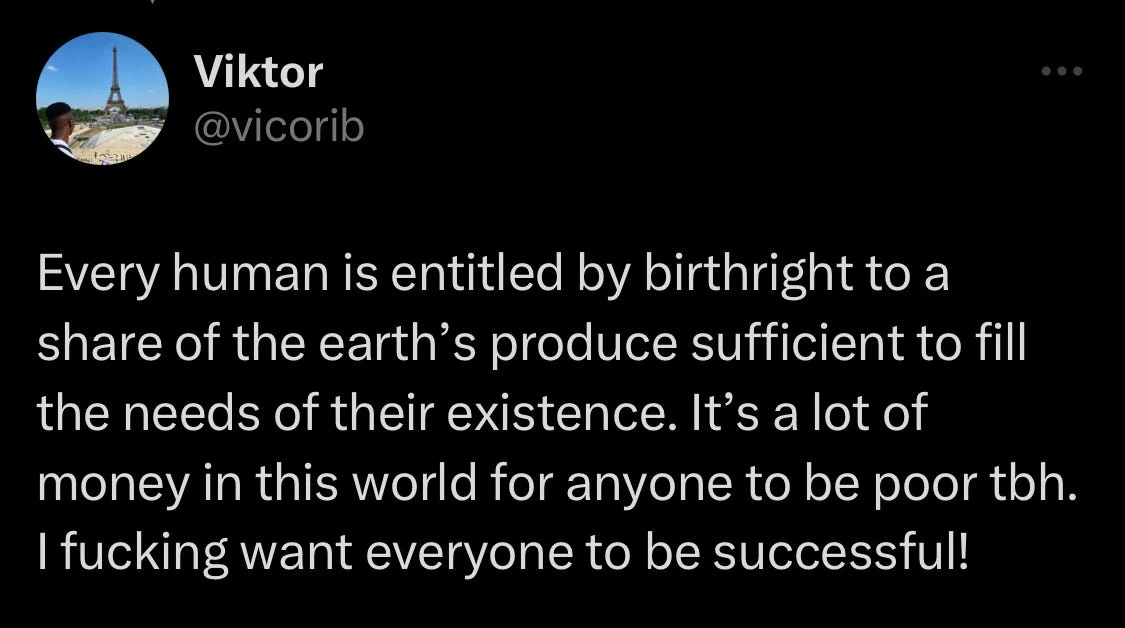
I believe every human being is born with a claim on the Earth's produce, enough to cover the basic needs of a life. I also believe this planet holds enough for everyone to live in comfort. That conviction sits at the center of what I call my mandate: help end poverty and build a world where prosperity is the default for everybody. I sometimes joke that the gods handed me this assignment 😃. The joke doesn't make the assignment any less real.
I've been tweeting pieces of this for a while. Here's the full picture.
A birthright older than me
I'm hardly the first person to say this. In 1797, Thomas Paine argued that the earth in its natural state was the common property of the human race. Paine accepted private property as necessary. His fix was a ground rent owed by landowners to the community, used to pay every citizen a lump sum at 21 and a pension from 50.
About a century and a half later, the world wrote a version of the same idea into Article 25 of the Universal Declaration of Human Rights. It says everyone has the right to a standard of living adequate for the health and well-being of themselves and their family, including food and housing.
So the principle has been on paper since 1948. The follow-through is what's missing.
The scale of the problem
The World Bank estimates the pandemic pushed about 70 million people into extreme poverty in 2020, the largest one-year jump since global tracking began in 1990. That left roughly 719 million people living on less than $2.15 a day. The UN's latest hunger report puts the number of people who faced hunger in 2022 somewhere between 691 and 783 million.
Those numbers are brutal, and they come after decades of real progress. Extreme poverty fell dramatically between 1990 and 2019 before COVID knocked the world off course. We've already proven this problem can shrink. Now we have to finish it.
Scarcity is the wrong diagnosis
The world wastes food on a staggering scale. UNEP estimates that 931 million tonnes of food, about 17% of everything available to consumers, went into the trash in 2019. That figure counts inedible parts like bones and shells too, so a fair share of it could never feed anyone. Even so, the scale says a lot about how the system works.
Amartya Sen made the sharper version of this argument decades ago. In Poverty and Famines (1981), he showed that famines often happen while food supplies are adequate. He lived through the Bengal famine of 1943 as a boy. About three million people died, and the core problem was that rural laborers lost their jobs and could no longer afford to eat. Sen went on to win the Nobel Prize in economics in 1998.
That's why I say the real challenge is distribution. People need resources within reach, and they need the means to claim them.
Growth and targeting together
Here's the part people on both sides of this debate like to skip. The biggest poverty reduction in human history happened in China, where the number of people below the extreme poverty line fell by close to 800 million over 40 years, nearly three-quarters of the global reduction. The World Bank describes that approach as resting on two pillars: broad economic transformation that raised incomes, and targeted support for the people and places growth left behind.
That's the lesson I take from it. Redistribution alone can't carry the load, and growth alone leaves people stranded. A real plan needs both, along with direct investment in the root causes, especially access to education and healthcare.
Where technology comes in
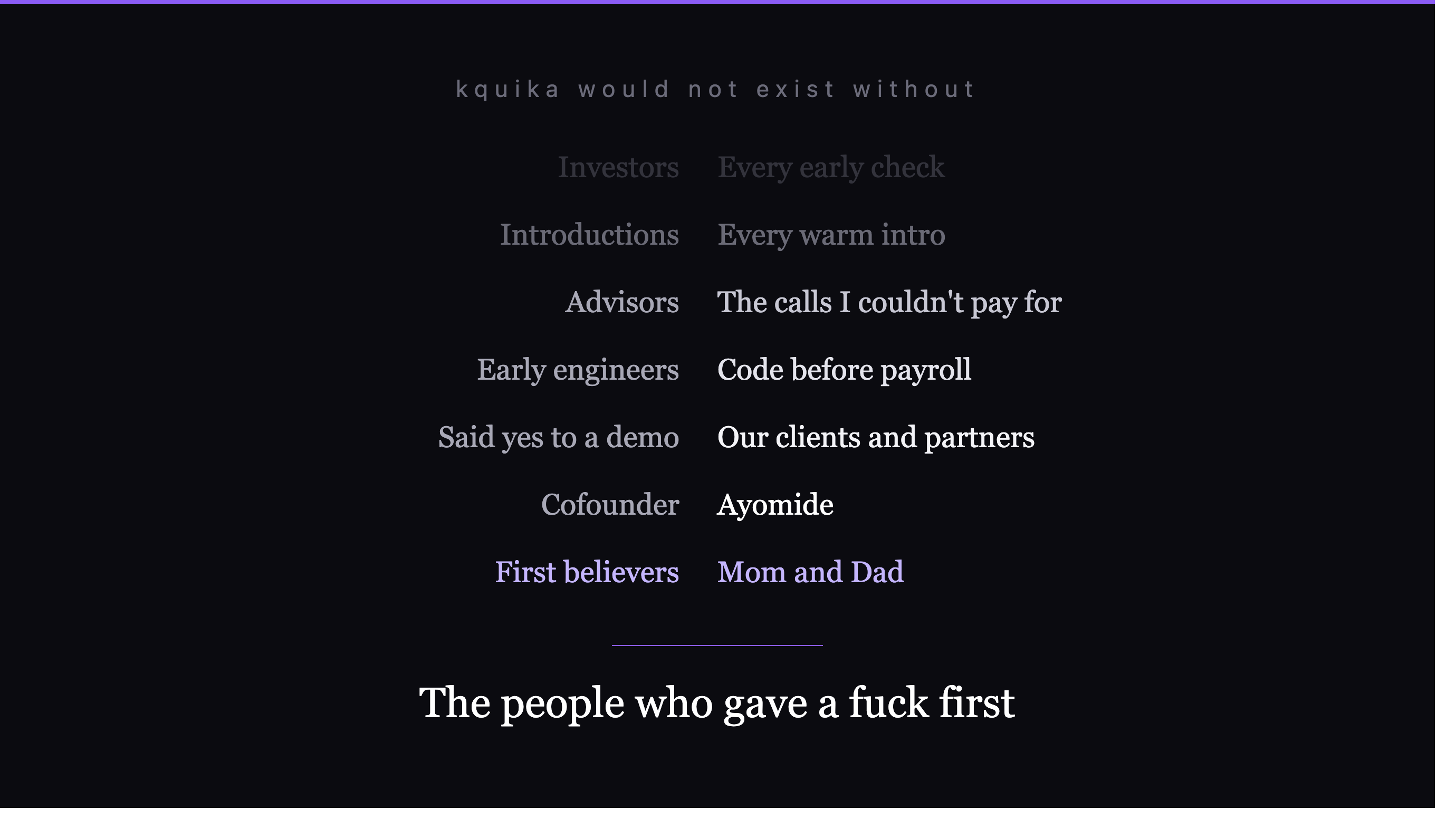
I'm a technologist, a tech pastor if you like, and I'm building Kquika into a global company. So yes, I believe innovation is how abundance becomes real.
Energy is the clearest example. Between 2010 and 2021, the cost of electricity from new utility-scale solar projects fell by 88%. Sunlight was always abundant. Technology made it cheap. The same logic applies to farming methods that grow more food with fewer resources, and to software that puts critical information in the hands of the people who need it.
One human family
None of this stops at a border. Poverty doesn't check passports, and neither should the people fighting it. If we pool our knowledge and resources as one human family, ending extreme poverty becomes an engineering problem with a deadline.
The World Bank's own report says the 2030 goal of ending extreme poverty is out of reach without history-defying economic growth. I read that as a challenge.
The mandate
Every person on this planet deserves a life of dignity. The resources exist, and the technology keeps getting better. What we need now is the will to finish the job and the people willing to build it with me.
That's my mandate, gods or no gods 😃. I intend to spend my life on it.
Let's build it.