I watched the Biden-Trump debate Thursday night. CNN's Atlanta studio, 9 p.m. Eastern, two men aged 81 and 78 standing at podiums for ninety minutes.
I'm not going to diagnose anybody from my couch, and I'm not interested in the horse race. Biden's campaign said he had a cold, and a cold is a real thing. What I couldn't stop thinking about was simpler. The two people asking to run the most powerful country on earth for the next four years are both old enough that the entire country spent the night watching for signs of decline. Trump answered the age question by pointing to cognitive tests he says he aced. That we've reached the point where a presidential candidate cites a cognitive test as a credential tells you everything.
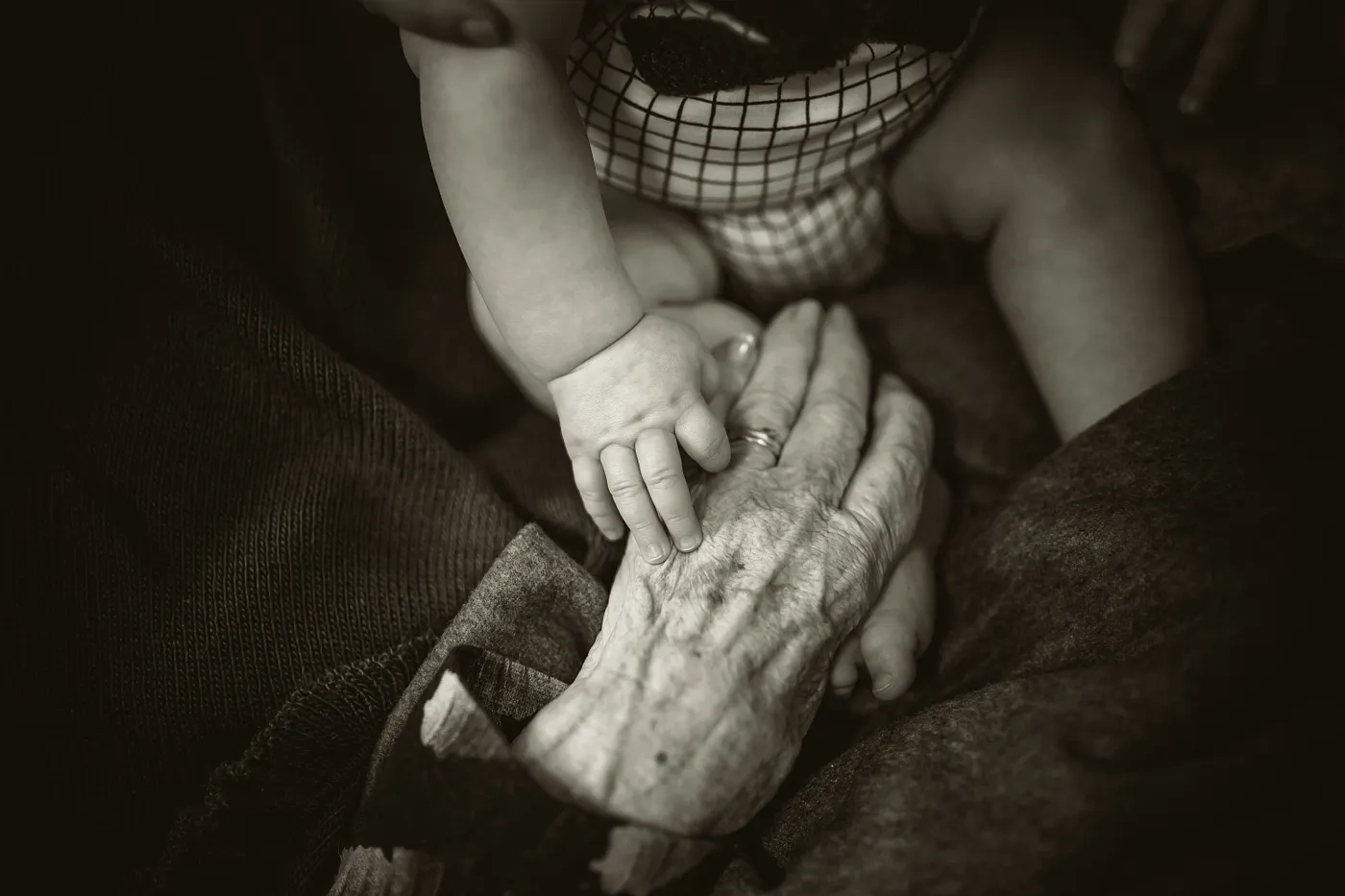
It made me think about my grandmother. She's my only living grandparent, turning 90 soon, and I've watched the woman who raised half my family lose pieces of herself year by year. Nothing about that is beautiful.
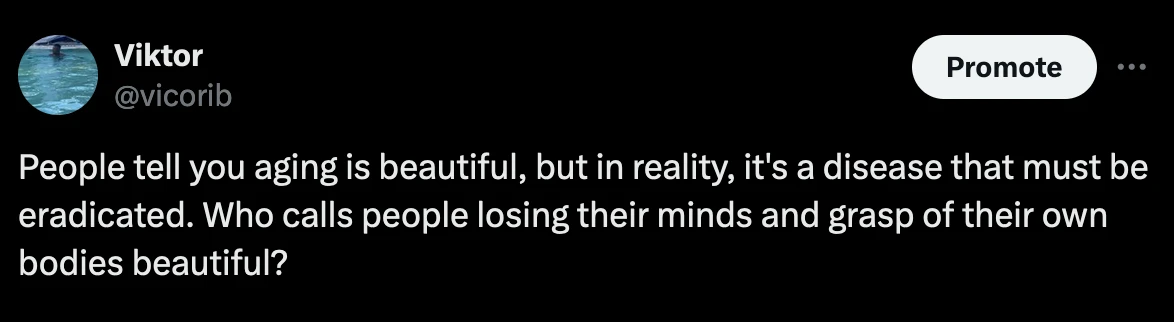
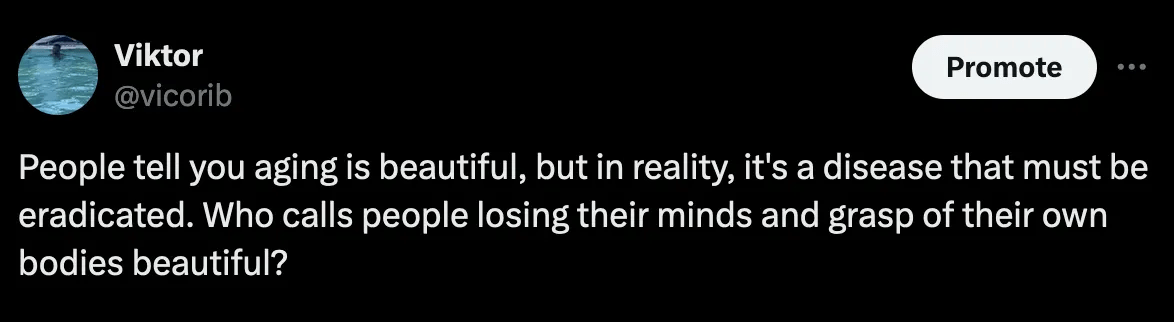
We call aging natural and leave it there. I think it's a disease, and I think we should be trying to cure it.
What aging actually is
There's a well-known paper on this. In 2013, López-Otín and colleagues published "The Hallmarks of Aging" in Cell, laying out nine biological processes that drive the whole thing. Last year they expanded it to twelve: genomic instability, telomere attrition, epigenetic alterations, loss of proteostasis, disabled macroautophagy, deregulated nutrient sensing, mitochondrial dysfunction, cellular senescence, stem cell exhaustion, altered intercellular communication, chronic inflammation, and dysbiosis.
Strip the vocabulary away and the picture is clear:
- DNA damage piles up. Mutations accumulate and cells stop working right. Some turn cancerous.
- Telomeres wear down. The caps on your chromosomes shorten with every division. Once they get too short, the cell quits dividing or kills itself, and your tissue loses its ability to repair.
- Cells stop cleaning house. Damaged proteins accumulate instead of getting cleared, which is the story behind Alzheimer's and Parkinson's.
- Mitochondria falter. Less energy, more oxidative damage.
- Zombie cells accumulate. Senescent cells stop dividing and refuse to die, sitting in your tissue pumping out inflammatory signals that wreck the cells around them.
- Stem cells run out. Repair slows down everywhere.
- Inflammation becomes permanent. Your body ends up in a low-grade war with itself.
Every one of those is a mechanism. Mechanisms can be targeted.
The part that scares me
The brain takes the worst of it. Cognitive aging runs from misplacing your keys to Alzheimer's, and the machinery behind it involves synapses degrading, neurons dying, and the brain losing its ability to grow new ones. Amyloid-beta plaques and tau tangles pile up and break the connections between cells.
The clinical description doesn't capture what this does to a family. You watch someone repeat a question they asked four minutes ago. You watch them lose the thread mid-sentence. You start managing their life for them while pretending you aren't. Anyone who's been through it knows.
The bill
Aging is also the largest line item nobody names. Age-related disease drives healthcare spending everywhere, and the costs go past hospital bills to lost work and the unpaid labor of family members who become caretakers. As populations skew older, fewer working-age people support more retirees, and the pension math stops working.
There's a striking number on the other side of this ledger. Andrew Scott, Martin Ellison, and David Sinclair ran the economics in Nature Aging in 2021. Slowing aging enough to add one year of life expectancy is worth $38 trillion. Ten years is worth $367 trillion. They also found that targeting aging itself beats eradicating any individual disease, because it buys you healthier years and longer ones at the same time.
We spend fortunes fighting the diseases downstream of aging while barely funding work on the thing producing them.
Call it what it is
Naming matters more than it sounds. Regulators approve drugs for diseases, so if aging isn't one, nobody can run a trial for a drug that treats it.
This is already shifting. The WHO's ICD-11 includes the extension code XT9T for "ageing-related," and the code MG2A, originally listed as "old age," now reads "ageing associated decline in intrinsic capacity." It's bureaucratic language, and it's also the door opening.
What's actually being built
- Senolytics. Drugs that hunt down senescent cells and kill them. This has moved past mice. In 2019, Justice and colleagues ran a first-in-human pilot, giving dasatinib plus quercetin to 14 patients with idiopathic pulmonary fibrosis. Their walking distance, gait speed, and chair-stand times improved measurably. Fourteen patients with no control group proves very little, and it's the right kind of very little.
- Telomerase. Lengthening telomeres extends lifespan in model organisms. It also has an obvious hazard, since unchecked cell division is what cancer is. Anyone who waves that away isn't being serious.
- Mitochondrial rejuvenation. Getting cells to build new mitochondria, balancing how they fuse and divide, and reducing oxidative damage.
- Regenerative medicine. Stem cell therapy, engineered tissue, and gene editing with CRISPR-Cas9 to replace what's worn out or fix what's broken.
None of these is finished. All of them are real.
The argument
I'll grant what people say about aging. There's wisdom in it, and something worth honoring in a life fully lived. Grant all of that, and it doesn't change the biology. My grandmother didn't consent to losing her memory, and no one else does either.
We didn't accept smallpox as natural. We didn't accept polio. Both were as natural as anything gets, and we ended them because we decided not to accept them.
Aging is a process with named mechanisms, and we're learning to target them. The only question left is how hard we're willing to work on it.
Get to work.